Child Actor 101Child Actor 101 Open Call 11Free to submit

Open Call 11

Child Actor 101's Free Talent Representation Open Call

Free Submission Guidelines & Tips

Show us who your actor really is, what they realistically play, and what they can do.

Submissions: August 4 – September 7, 2026Ages 6–21Free to submit

Start here

Open Call 11 is completely free to enter. You do not need to purchase a workshop, class, coaching session, submission review or any other Child Actor 101 service to participate. You do not need expensive or elaborate materials — just current, clear, thoughtful materials that represent the actor well.

01 Headshots & photos

At least two required

Please upload at least two recent headshots or high-quality snapshots. Professional actor headshots are wonderful, but they are not required. A strong, well-lit snapshot is absolutely acceptable.

The most important rule: your photos should look like your actor right now. Kids change quickly. Choose materials that represent the performer a representative would actually meet today.

Ask: What could this actor realistically walk onto a television or film set and play tomorrow?

Photo #1 — Commercial

Happy, joyful, genuine, approachable, excited. A natural smile with teeth is preferred; the eyes should participate too.

  • Use genuine energy, not a pasted-on school-picture smile.
  • Ask: Does this look like someone I’d want to meet?

Photo #2 — Theatrical

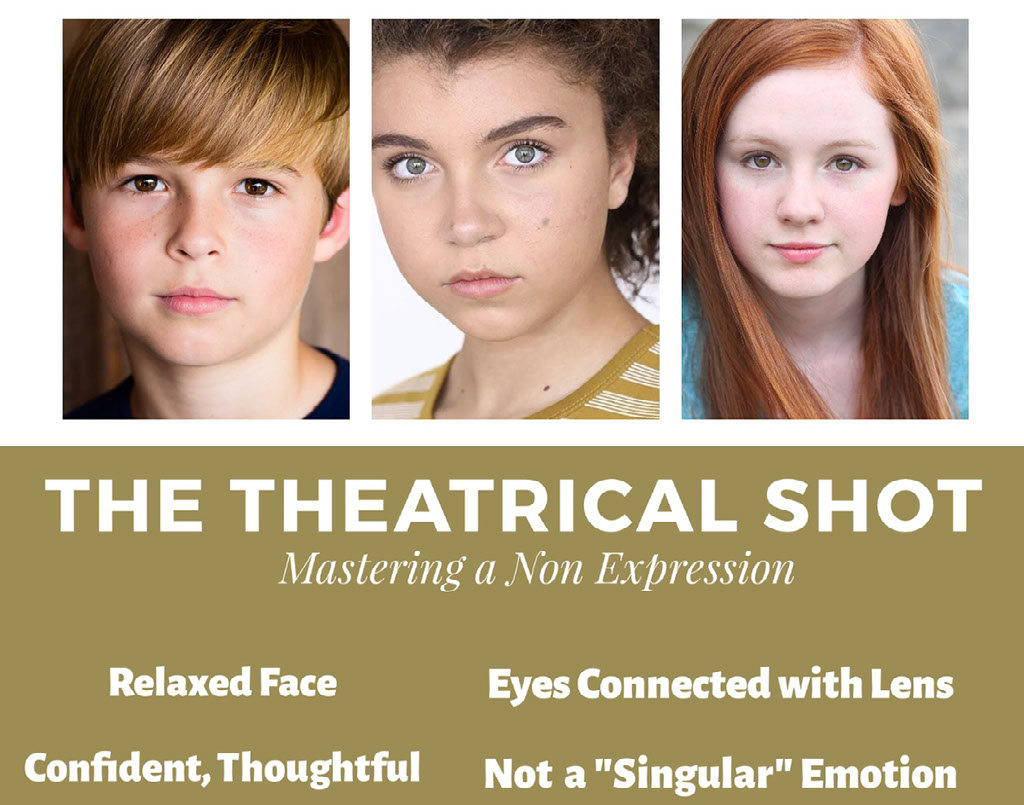
In the industry, theatrical generally means television and film, not stage acting. Think confident, relaxed, thoughtful, serious, dramatic.

  • Serious does not mean angry, miserable or intensely brooding.
  • The strongest photos feel grounded and effortless — like a real person with something going on behind their eyes.

Optional photo #3 — Character type

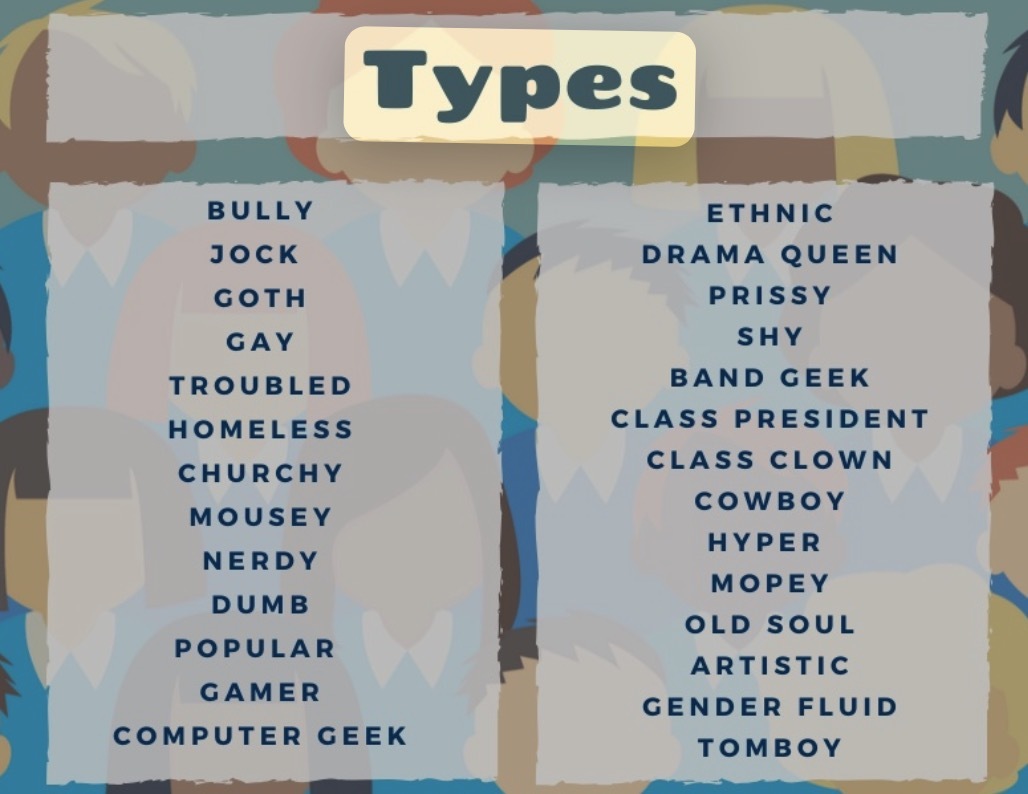
Show another believable side: quirky, nerd, bully, surfer, gothic, athlete, country kid, class clown or young professional are examples only.

  • Do not force a costume or a role the actor could not believably play.
  • Type is about helping representatives recognize what already exists in the actor.

Photo examples

Commercial headshot examples for young performers
Commercial examples
Theatrical headshot examples for young performers
Theatrical examples
Light theatrical headshot examples for young performers
Light theatrical examples

02 Personality slate

Required · maximum 90 seconds

Start with name, age and location. Then choose two personality elements. These are prompts, not interview questions requiring perfect answers.

The goal is to meet the person behind the headshot. Don’t perform personality. Quiet, dry, silly, thoughtful and a little weird can all be memorable when they are real.

Choose any two prompts

Give the actor something they genuinely want to talk about.

  • Fun fact, pet peeve, favorite book, TV show or movie
  • A joke, funny story, hidden talent or favorite hobby
  • Why they love acting, a performance idol, or a career they admire
  • Introduce a pet, or tell the craziest thing that has happened to them

Film simply

You do not need cinematic production. Make the actor easy and enjoyable to watch.

  • Use a reasonably quiet space, good natural/soft light and clear sound.
  • Keep the camera around eye level with clean, simple framing.
  • Let them speak conversationally and allow pauses, thinking and spontaneity.

Skip the overproduction

Polished is good. Overproduced is not necessary.

  • No dramatic music, beauty filters, montages or elaborate graphics.
  • Do not script every word or feed answers from behind the camera.
  • Upload to YouTube or Vimeo and test that the link is viewable.

Personality slate example

03 Acting sample

Optional

If you have strong current material, this is the opportunity to show representatives what the actor can do. Choose the material that offers the best current evidence of ability — not necessarily the newest, most expensive or most professionally branded.

Demo reel — maximum 3 minutes

Completed professional work, self-produced demo scenes and permitted previous self-tapes are all welcome. Put the strongest material first.

  • Do not expect someone to watch three minutes before deciding whether they are interested.
  • Choose clips where the actor speaks and engages quickly.

Self-tape scene — maximum 5 minutes

You may share a permitted previous audition, self-tape scene or monologue.

  • Use normal self-tape standards: good light, clear sound, appropriate framing and a reader when needed.
  • Choose memorized material with strong, believable acting choices.

What helps — and what does not

Look for acting that is specific, connected, interesting and believable.

  • Avoid audience-recorded stage performances, long montages and scenes dominated by someone else.
  • Do not include old footage if the actor now looks substantially different, or anything you are not permitted to share.
  • A terrific current self-tape is more useful than weak professional footage.

Comedy reel example

Self-tape scene example

04 Special skill video

Optional · maximum 2 minutes

Use this only when a skill genuinely adds something to the performer’s professional profile. Quality over quantity.

  • Singing, dance, musical instruments, stand-up, voice acting, martial arts, gymnastics, sports, magic or another unusual performance skill.
  • If your actor is an exceptional singer, let us hear them sing. If they can play four ukulele chords from six weeks of lessons in 2023, we can probably survive without the documentary.

05 Casting profile

Required

The application requires a public Actors Access or Casting Networks profile. For television and film, Actors Access is particularly important; Casting Networks is also widely used, especially for commercial casting.

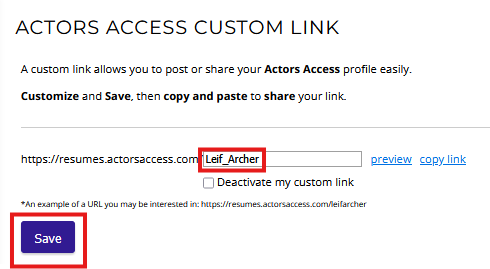
A vanity/public profile URL is preferred when available. Open the link yourself while logged out or in a private browser window before submitting.

  • Make sure the profile shows current photos, résumé, media, location, credits, training and representation information when applicable.
  • A beautiful Open Call application connected to a profile that has not been updated since the actor lost six teeth is not helping anybody.

Casting profile example

Example of a helpful casting profile

06 Résumé

Recommended

You may provide a link to the actor’s résumé or upload it directly. Keep it clean, readable and current. A shorter professional résumé is better than a crowded amateur one.

  • Appropriate sections can include Film/Television, Theatre, commercials when appropriate, training and special skills.
  • For developing actors without many professional credits, training matters.
  • Do not pad a résumé with background work or unrelated accomplishments simply to make it longer.
Free Industry Standard Youth Resume CreatorBuild a clean, professional youth acting résumé with Resume101.Resume101 ↗

07 Representation

Answer honestly

The application asks whether the actor is currently represented and what type of representation they are seeking. Already having representation does not necessarily mean there is nothing else to seek.

  • You may seek a manager, regional agent, theatrical TV/film agent, commercial agent, voiceover agent, theatre agent, print agent, hosting agent or across-the-board representation.
  • Use representation notes for useful context about the actor’s situation, markets or exclusivity. Keep them concise and factual.

08 Location & work information

Accuracy matters

The application asks about city, state/province, country, local-hire cities, union status, Coogan account, work permit and passport. Answer accurately.

Local Hire means that you are able to travel to the location and secure accommodations on your own dime.

  • If your actor can genuinely work locally in Los Angeles, San Diego, Atlanta, New York or another market, include it.
  • Accuracy is considerably more useful than trying to make an actor appear available everywhere.

10 Type matters

Make the answer easy

One of the biggest mistakes performers make is trying to demonstrate that they can play anything. Nobody can — and they do not need to.

Representatives are often answering a simpler question: Where would I submit this actor tomorrow? Your photos, acting, slate and profile should make that answer easier.

Casting begins with believability. Range develops over time.

Type examples

Examples of believable young performer types

11 Don’t erase the kid

Let personality stay visible

Parents understandably want everything to look professional. But perfect hair, perfect answers, perfect posture, perfect smile and a perfectly rehearsed slate can leave us with absolutely no idea who the kid actually is.

Do not polish away the interesting parts. Representatives are wondering who they could submit, who casting would remember, who can act, who has a point of view and who might make people pay attention.

Charisma example

12 · Before you hit submit

A five-minute final check

Performer & representation

Performer, location, work and representation information are accurate.

It is clear what representation you are seeking.

Photos

At least two recent photos show how the actor looks now.

Commercial, theatrical and any optional type image are strong and believable.

Personality slate

Name, age, location and two personality elements are included.

It is under 90 seconds, clear, conversational and viewable without permission.

Acting / special skill videos

Only include strong current material that suits the actor’s age and type.

Confirm every link works and you have permission to share it.

Casting profile & résumé

Profile, photos, media and résumé are current.

Test every link one final time.